
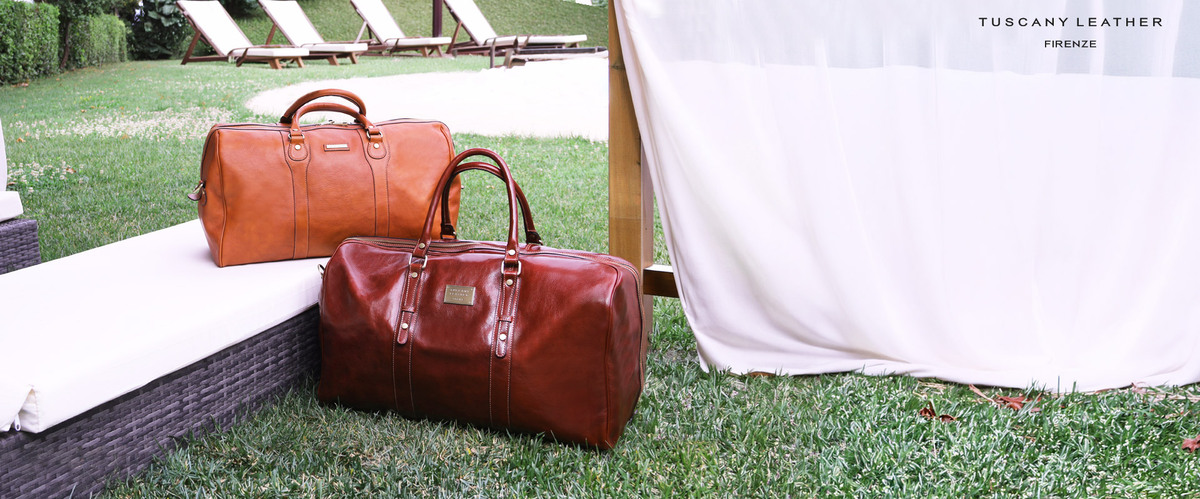
“Lightweight” is useful only when it describes a measured empty weight, not the impression created by a photograph. A leather travel bag may look compact and still feel substantial once packed. The better comparison is between bags that carry a similar amount of clothing and can be managed comfortably throughout your journey.
Start with the trip, then compare the specifications. A bag for one night away and a bag intended to carry a laptop, shoes and several changes of clothes are solving different problems.
Ask for the empty weight first
The bag’s own weight is part of the total you lift, carry and take through an airport. Request a figure rather than relying on descriptions such as “easy to carry” or “travel friendly”. Compare like with like: similar capacity, similar dimensions and the same included accessories.
Handles, lining, reinforced panels and hardware all contribute. The lightest design is not automatically the best, but the actual weight lets you make an informed trade-off.
Compare usable space, not just a large outline
Lay out your usual packing and consider the interior shape. A narrow opening can make a roomy bag awkward to fill, while extensive internal divisions may leave less flexible space for clothing. Check whether shoes or a wash bag will displace the main contents.
For short trips, try removing items that duplicate what is already available at your destination. Reducing the packing load may be more effective than searching for a marginally lighter bag.
Check the whole journey, including the walking
Picture the route from home to transport, stairs, transfers and the final walk to your accommodation. A top handle may be convenient for a short lift; an adjustable strap may help when carrying for longer. Test the packed bag using the method you expect to use.
If a full leather holdall feels impractical on that route, compare other constructions or wheeled luggage. Style should work with the journey rather than require you to tolerate unsuitable weight.
Treat cabin-baggage claims carefully
Airline size, weight and item allowances vary by carrier, fare and route and can change. Check the official allowance for your booking before travelling. Include protruding handles and other fixed parts when comparing measurements, and remember that a soft bag can become larger when overfilled.
A description such as “weekender” or “cabin bag” is not a guarantee that it will be accepted on your flight.
Keep essentials accessible without adding clutter
Identify where your travel documents, charger and small personal items will go. A dedicated pocket can save time, but too many pouches add weight and make packing complicated. Use only the organisation that improves access.
Keep liquids securely closed and separated from clothing and electronics. Do not assume a leather pocket or ordinary lining will contain a leak.
Lightweight leather travel bag questions
Is thinner leather always a better choice?
No. Thickness is only one part of the construction. Evaluate seams, reinforcement, handles and intended use alongside the total weight.
Can a leather travel bag be used as a personal item?
Only if the packed dimensions and your booking’s rules permit it. Check the carrier’s current requirements rather than relying on the bag’s marketing name.
Should the bag be filled to its maximum?
Only when the contents fit comfortably and the maker’s guidance permits the load. Avoid straining the closure or handles just to use every available gap.
Explore the leather travel bags section, and compare leather backpacks for trips where a different carrying format may work better. Choose enough capacity for your real packing list, with a weight you can manage.