
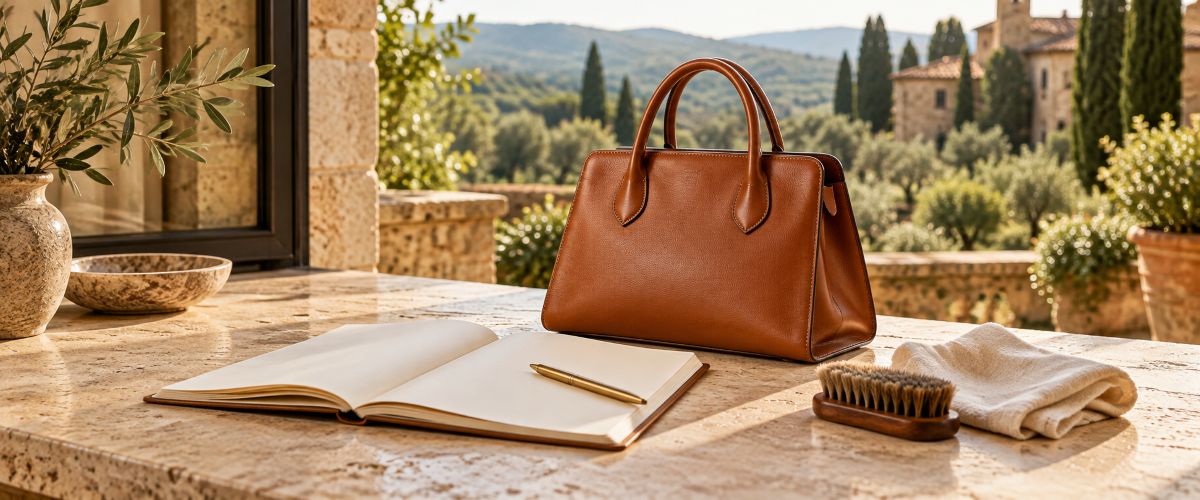
A leather bag can spend weeks on a shelf between outings. How it rests matters: a heavy object leaning on its side, a sharply folded strap or damp contents left inside can create problems that are easy to miss until the next use. Good storage begins with a clean, dry bag and gentle support for its intended shape.
Use the manufacturer's instructions as your starting point. Smooth finished leather, suede, metallic finishes and coated surfaces may need different treatment. An attractive storage arrangement should still let you remove the bag without squeezing or scraping it.
Empty the bag before putting it away
Check every compartment for pens, cosmetics, food, receipts and small heavy objects. Remove detachable organisers if they press against the lining or distort the body. Loose contents can leave pressure marks, leak or transfer colour while the bag is out of sight.
Brush away loose interior debris gently, following the lining's care guidance. If the bag is damp, allow it to dry naturally in an airy place away from direct heat before covering it. Do not use a hairdryer or place it against a radiator.
Support the outline without stretching it
Use clean, colourfast soft fabric or acid-free tissue to support the main compartment lightly. Add enough to prevent the sides collapsing unnecessarily, but stop before the closure strains or seams pull. Avoid newspaper and strongly coloured stuffing that could transfer print or dye.
A structured handbag may rest upright on its base. A soft, unstructured design may need a different position so it is not forced into a rigid outline. Follow the maker's guidance and let the construction determine the support rather than filling every bag identically.
Let handles and straps rest comfortably
For longer storage, avoid suspending a loaded bag by its handles or a narrow shoulder strap. Support the body and arrange straps in a gentle curve without sharp folds. If a strap detaches, remove it only as intended and place it where its fittings will not press into the leather.
Check that chain straps, buckles and zip pulls are not trapped against a visible panel. A clean soft cloth can separate contact points, provided it is colourfast and does not shed onto the finish.
Choose a breathable cover and a suitable shelf
A clean, appropriately sized fabric dust bag can shield the surface from dust and rubbing. Do not pack the covered handbag so tightly that its handles bend. Avoid sealing a damp bag in plastic or placing it in an airtight container.
Choose a stable indoor location away from direct sunlight, radiators and damp walls. Leave space between bags instead of stacking heavy pieces on top of one another. A shelf that is easy to inspect is more useful than an overcrowded display you rarely open.
Separate overnight storage from a seasonal break
For a bag returning to use tomorrow, emptying unnecessary weight and setting it on a safe surface may be enough. Before a longer break, inspect the lining, closures and shape, then check periodically for moisture, odour or marks.
Conditioning is not a nightly storage step. Use a treatment only when suitable for the leather, finish and maker's directions, and test as instructed in an inconspicuous area. Persistent mould, staining or a damaged finish calls for specialist advice.
Leather bag storage questions
Should I fill every pocket?
No. Support the body gently; stuffing small pockets can stretch them or create unnecessary pressure.
Can I stack handbags to save space?
Avoid placing heavy bags on softer ones. Give each piece enough room to preserve its natural outline and protect the surface from rubbing.
For material context, explore our guide to leather products. Visit women's leather bags or men's leather bags for guidance on the styles you use. Before the next outing, remove the support and check the bag in daylight.